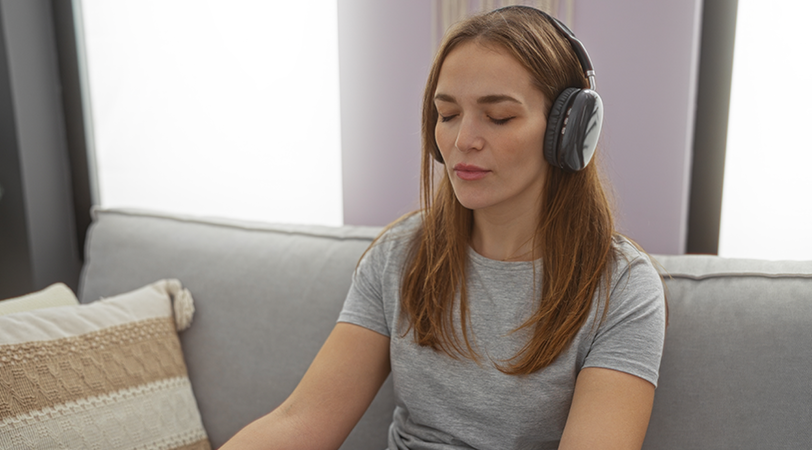
What makes bilateral music unique is how it subtly engages the brain without demanding much from the listener. There’s no catchy chorus, just gentle tones, nature sounds, or ambient melodies that drift from side to side. Many people say it helps quiet the mental chatter, making space for deeper focus, emotional regulation, or simply a moment of calm.
The magic, though, is in how you listen. To experience the full effect, you’ll need headphones, traditional over-ear or earbuds work well, but bone-conducting headphones are an excellent option too, especially if you prefer to stay aware of your surroundings. The key is that each ear receives the sound separately; without that, the bilateral stimulation won’t happen.
People use bilateral music for a variety of reasons. Some put it on during journaling or meditation to help stay centered. Others use it while working to encourage focus, or before bed as a way to wind down. There’s even growing interest in using it during walks, yoga, or breathwork.
Unlike most music, the purpose is self-regulation. It’s about gently nudging your nervous system into a more balanced state. You may not always notice the changes consciously, but your body often will. Less tension in the shoulders. A deeper breath. A bit more space between thoughts.
Disclaimer:
Bilateral music can be a supportive tool for relaxation, focus, and emotional processing, but it is not a substitute for professional medical or psychological care. If you’re dealing with trauma, anxiety, or other mental health concerns, please consult a qualified healthcare provider.