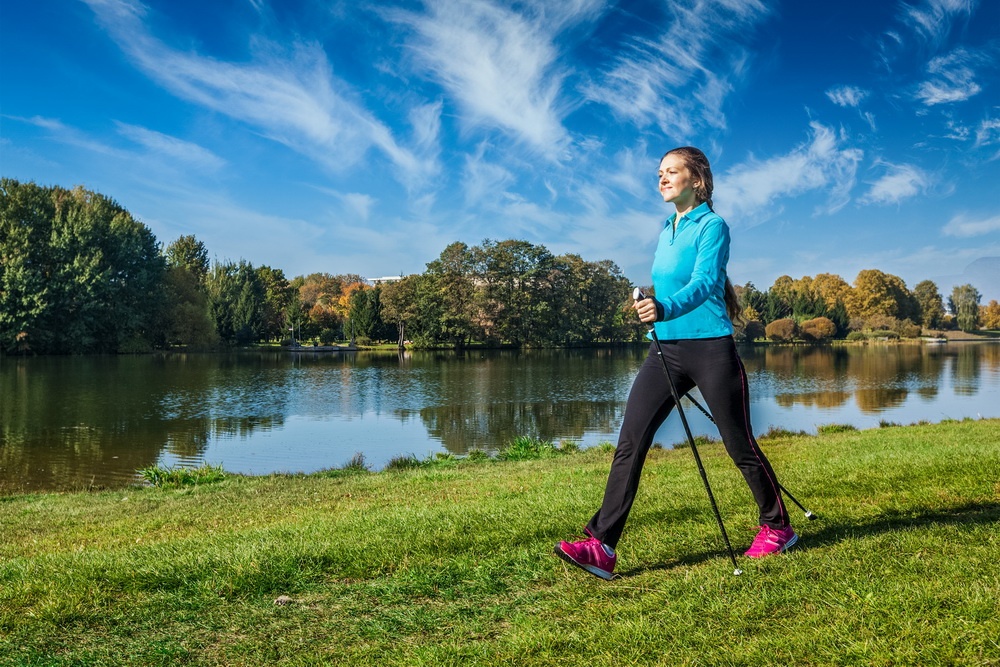
If you love walking but hate the idea of “exercise”… this might be your thing. You’ve probably seen people walking with poles and thought, what is that about? Did you forget your cross-country skis?
Nordic (or pole) walking is actually a full-body workout. Regular walking mainly uses your legs (about 50%), while Nordic walking engages 80–90% of your muscles, including your arms, shoulders, upper back (lats), triceps, core, glutes, and legs.
Those poles, when used properly (and there is a technique to it), they help take pressure off your hips, knees, and ankles, while getting your upper body involved too, especially your back and triceps. So you’re doing more work… with less joint strain. And it just feels like a regular walk.
Once you get the hang of it, it feels effortless. You’re moving more, but it doesn’t feel like you’re pushing harder.
It’s also one of those activities that works year-round.
In the winter, the poles give you that extra bit of balance on snow and ice (which, let’s be honest, makes getting out the door a whole lot easier). In the warmer months, they help with hills, trails, and longer walks—especially when the terrain gets uneven.
And if you’ve ever had sore joints, tight hips… this can make
a big difference. The poles help you stand taller, improve posture, and keep everything moving in a natural way.
The key is learning how to use them properly. It’s more of a backward push that helps propel you forward. Once you get that motion down, everything clicks. Your stride feels longer, your pace picks up naturally, and you start to notice you can go farther without feeling as tired.
And that’s why people stick with it. It just feels like a really good walk. So if you already enjoy walking, but would love to include your upper body at the same time… this might be worth trying.
Quick tips to get started:
• Adjust your pole height so the inside of your elbows are about 90° (or slightly shorter for a stronger push)
• Use a “punch > plant > push back” motion, keeping the poles naturally from a locked wrist point, not in front, this maximizes the benefits
• Maintain a relaxed grip and keep the poles angled backward at all times
Curious how it’s helped others with different health challenges? Find videos and testimonials at keenfit.com/ real-people-real-reasons-why